
As you wrap up the 2026 harvest and start to catch your breath before planning for 2027, it’s a good time to take stock of what worked and where you can get more from your inputs. With margins tight, every dollar needs to earn its place. And sometimes, it’s the smaller investments that deserve a closer look.
Soybean inoculation is one of them. This relatively low-cost practice can support crop performance by helping soybeans access one of their most important nutrients: nitrogen.
Soybeans need significant amounts of nitrogen to grow, develop pods and produce grain. Fortunately, they have a natural advantage.
Through a process called biological nitrogen fixation, beneficial bacteria known as rhizobia form nodules on soybean roots. Inside these nodules, the bacteria convert atmospheric nitrogen into a form the plant can use.
But for this partnership to work, the right bacteria need to be present, alive and active.
That’s where inoculation comes in. Soybean inoculants introduce nitrogen-fixing bacteria to help establish effective nodulation, particularly in fields where natural rhizobia populations may be limited.
Not all inoculants are created equal. You’re working with living organisms, so quality and survival matter.
When choosing an inoculant, here’s what you should consider:
Our soybean inoculant is used and recommended by farmers across the globe for its proven performance to increase root mass and soybean yields. Induct EXO incorporates proprietary EXO activation technology designed to support rhizobia survival and activity, helping establish the biological relationship that makes nitrogen fixation possible.
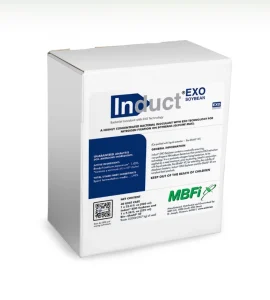
Explore how Induct EXO can support your soybean crop.
For growers, effective inoculation can mean better nitrogen availability, stronger early plant development and improved yield potential. And because it’s a relatively low-cost input, it can offer an attractive return on investment, particularly in fields where nitrogen-fixing bacteria are limited.
As you plan for 2027, take another look at your soybean inoculation strategy. Consider your field history, weigh your options and make sure you’re getting the most value from every input dollar.